
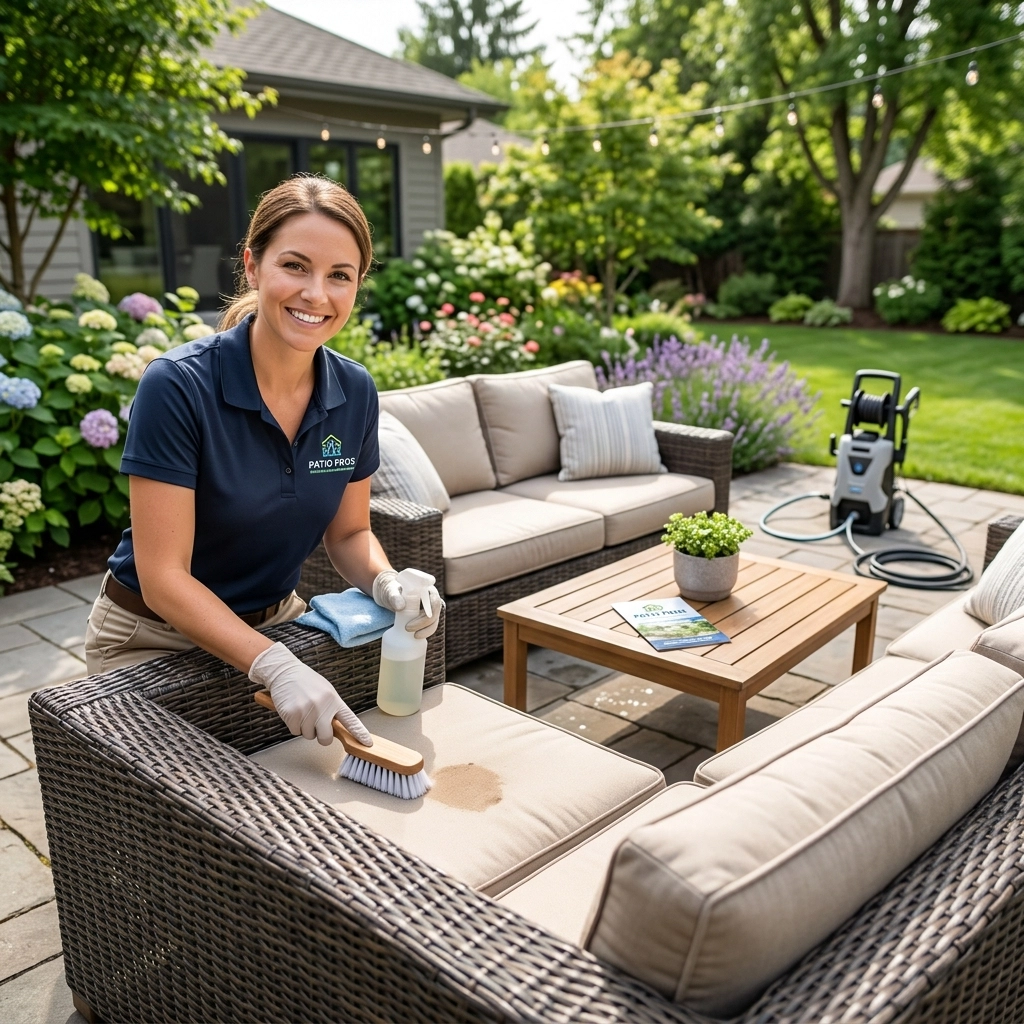
Patio season is when your outdoor space turns into extra living square footage. And if you’ve invested in quality teak, powder-coated aluminum, resin wicker, or performance fabrics, cleaning isn’t just about looks: it’s about protecting what you paid for.
Outdoor furniture takes a beating: pollen, bird droppings, sunscreen, grill grease, hard water, mildew, and constant UV exposure. The good news is you can prevent most “permanent” stains with the right habits and a smarter cleaning plan. This guide covers what to do yourself, what to avoid, and when professional outdoor furniture cleaning services are the best move.
Why outdoor furniture cleaning is really “asset protection”
Outdoor sets aren’t cheap. Even mid-range pieces can cost thousands once you add cushions, covers, and accessories. Regular cleaning:
- Prevents staining that becomes embedded (especially on fabrics and textured plastics)
- Stops mildew and mold from spreading into foam and seams
- Reduces oxidation and chalking on metals and plastics
- Protects finishes on wood (teak, eucalyptus, acacia) so they don’t dry out or splinter
- Extends cushion life by removing oils and grit that break down fibers
If you want your patio to feel “ready” the minute the weather turns, the best approach is scheduled maintenance: not panic cleaning the day before guests arrive.
Your patio season cleaning schedule (simple and realistic)
Most outdoor furniture should be cleaned at least twice a year: once in spring before regular use and again in fall before storage. If you use your patio constantly, a light monthly refresh makes a noticeable difference.
Here’s a practical schedule you can stick to:
- Early spring (deep clean): remove grime, mildew, pollen, winter residue; check for rust/finish issues
- Monthly (maintenance clean): quick wash-down + cushion spot checks
- Mid-summer (targeted refresh): treat sunscreen, food, and beverage stains; brighten fabrics
- Fall (pre-storage clean): prevent mold growth during storage; make next spring easier

What most DIY cleaning gets wrong (and how to avoid expensive damage)
You don’t need harsh chemicals to get great results: most damage happens because people overcorrect.
Avoid these common mistakes:
- Using bleach on the wrong surfaces. Bleach can weaken fabric fibers, discolor stitching, and damage some finishes.
- Pressure washing wicker or wood. It can fray fibers, force water into joints, and raise the grain.
- Scrubbing with abrasive pads or metal brushes. These scratch coatings, invite corrosion, and dull surfaces.
- Letting soap dry on furniture. Residue attracts dirt faster and can leave film or spotting.
- Putting cushions away damp. This is the fastest way to create mildew that returns again and again.
The calmer, safer rule: start gentle, test in an inconspicuous spot, and escalate only as needed.
The core method that works for most outdoor furniture
For general cleaning across many materials, this basic process is the safest starting point:
-
Remove debris first
Use a soft brush, microfiber cloth, or a vacuum (especially around seams and creases). -
Mix a gentle solution
Mild dish soap + warm water is usually enough. -
Clean with soft tools
Sponge, microfiber cloth, or a soft-bristle brush. -
Rinse thoroughly
A garden hose is perfect. Don’t blast seams or joints. -
Air dry completely
Sun is great for drying, but don’t leave wet cushions baking for hours if colors are prone to fading.
This approach prevents the “cleaning” that actually shortens the life of your furniture.
Material-by-material cleaning guide (so you don’t guess wrong)
Outdoor sets are usually mixed materials: frames, slings, cushions, and accent pieces: so it helps to treat each correctly.
Wicker and resin wicker (natural-looking, easy to damage)
Wicker (especially woven styles) traps dust and pollen in every groove.
Do:
- Use mild soap + warm water
- Use a soft sponge and a soft-to-medium toothbrush for tight areas
- Rinse gently and dry well
Don’t:
- Use a pressure washer (it can fray or loosen the weave)
- Soak it for long periods (water gets trapped and encourages mildew)
Aluminum and powder-coated metal (durable, but can oxidize)
Aluminum is outdoor-friendly, but it still needs care around joints and fasteners.
Do:
- Wash with mild soap and water
- Use a soft-bristle brush for textured finishes
- For oxidation, try a 1:1 vinegar and water solution (spot test first)
Don’t:
- Use abrasive pads that scratch powder coating
- Ignore small chips: those areas can corrode faster
Teak and other outdoor woods (beautiful, but finish-sensitive)
Teak is naturally resilient, but it still gets dirty and can grow mildew.
Do:
- Brush off debris regularly
- Clean with warm water + mild detergent; use a stiff bristle brush for ground-in dirt
- Use dedicated teak cleaner for stubborn mold (especially in shaded, damp areas)
Don’t:
- Over-sand without a plan (you can create uneven coloration)
- Pressure wash (it can raise grain and scar the surface)
Plastic and HDPE (low maintenance, still stains)
HDPE and outdoor plastics are tough, but they can stain from pollen, sunscreen, and leaf tannins.
Do:
- Mild soap + water for routine cleaning
- For stubborn stains, spot treat with citrus-based cleaner or isopropyl alcohol (test first)
Don’t:
- Use high pressure too close. If you must pressure wash, keep it controlled and at a safe distance.
Cushions and outdoor fabric: where “almost clean” isn’t clean enough
Cushions are where patios look tired the fastest. Even when the fabric looks fine, oils and moisture can sit below the surface and shorten the life of the fill.
Routine cushion care you can do weekly
- Shake out crumbs and debris
- Vacuum seams and piping (this is where mildew often starts)
- Blot spills immediately: don’t rub
Spot-cleaning the right way (no drama)
- Blot excess liquid with a clean towel
- Apply mild soap + water with a microfiber cloth
- Gently agitate (no aggressive scrubbing)
- Rinse with clean water
- Air dry fully, standing cushions on edge if possible
If you want a deeper cushion-specific walkthrough, here’s a helpful companion guide:
https://theultimatecleaningservice.com/the-ultimate-guide-to-outdoor-patio-cushion-cleaning-for-westchester-and-greenwich-homeowners

Mold, mildew, and “mystery stains”: what to do before it spreads
If your cushions smell musty or you see dark specks, don’t wait. Mold spreads and can permanently discolor fabric, especially in seams and under buttons.
For early-stage mildew on fabric:
- Start with soap + water
- Increase ventilation and dry completely in sunlight when possible (sunlight can help brighten lighter fabrics)
- If you’re considering stronger solutions (like diluted bleach mixes), you must confirm the fabric can handle it: some outdoor textiles tolerate it, others don’t
For wood with mildew:
- White vinegar + warm water can help (test first)
- Avoid saturating the wood or forcing water into joints
If mildew has gotten into foam, DIY cleaning often removes the surface signs but not the source. That’s where professional outdoor furniture cleaning services become the safer choice: especially if you’re trying to protect a high-end set.
When it makes sense to hire a professional outdoor furniture cleaning service
DIY works for light maintenance. Professional service is typically worth it when:
- You’re dealing with mildew that keeps returning
- Cushions have embedded oils (sunscreen, skin oils, food grease)
- You’ve got high-end materials (teak, specialty weaves, premium fabrics)
- You want consistent results before hosting or listing your home
- You don’t want the risk of discoloration from the wrong chemical or tool
A professional team brings the right mix of controlled agitation, material-safe cleaners, thorough rinse methods, and drying strategy: so your furniture looks refreshed without being “over-cleaned.”
What a professional outdoor furniture cleaning typically includes
Services vary based on material and condition, but a professional cleaning plan often includes:
- Pre-inspection (material type, existing damage, stain identification)
- Dry debris removal (vacuuming seams, brushing crevices)
- Material-safe washing for frames (wicker, metal, plastic, wood)
- Spot treatment for common stains (pollen, bird droppings, mildew spotting, food/oil)
- Cushion cleaning focused on seams, piping, and high-contact areas
- Thorough rinse to prevent residue and re-soiling
- Drying plan that reduces mildew return
For many homeowners, the biggest benefit is peace of mind: you’re not experimenting on furniture you want to keep for years.
Quick checklist: getting ready for your appointment (or your own deep clean)
If you’re planning a deep clean: DIY or professional: this prep makes everything easier:
- Remove covers and shake them out
- Clear leaves/debris from under the set
- Set aside any “problem cushions” you want treated first
- Point out rust spots, chips, loose weave, or wood cracking
- Make sure there’s access to an outdoor hose spigot if available
This helps the cleaning go faster and improves results.
Patio season upgrades that pair perfectly with furniture cleaning
If you’re already investing in your outdoor space, a couple related services can make everything feel brand new:
- Window cleaning to brighten the view from inside and out
- Power washing for patios, walkways, and pool areas
- Gutter cleaning to reduce overflow stains and spring runoff issues
If gutters are part of your spring to-do list too, this resource may help:
https://theultimatecleaningservice.com/gutters-clean

Outdoor furniture cleaning in Westchester County, NY: get your patio guest-ready
If you’re in Westchester County and want your outdoor furniture to look clean, comfortable, and truly ready for the season, Ultimate Cleaning Services can help you protect that investment with careful, material-aware cleaning.
Call 914-939-4132 to schedule outdoor furniture cleaning services or request details.
You can also book or contact us at https://theultimatecleaningservice.com.
Whether you need a full patio refresh or targeted cushion and frame cleaning, we’ll help you start the season with furniture that looks as good as it feels.